Why Government Portal Integrations Quietly Shape the Success of Digital Lending Platforms
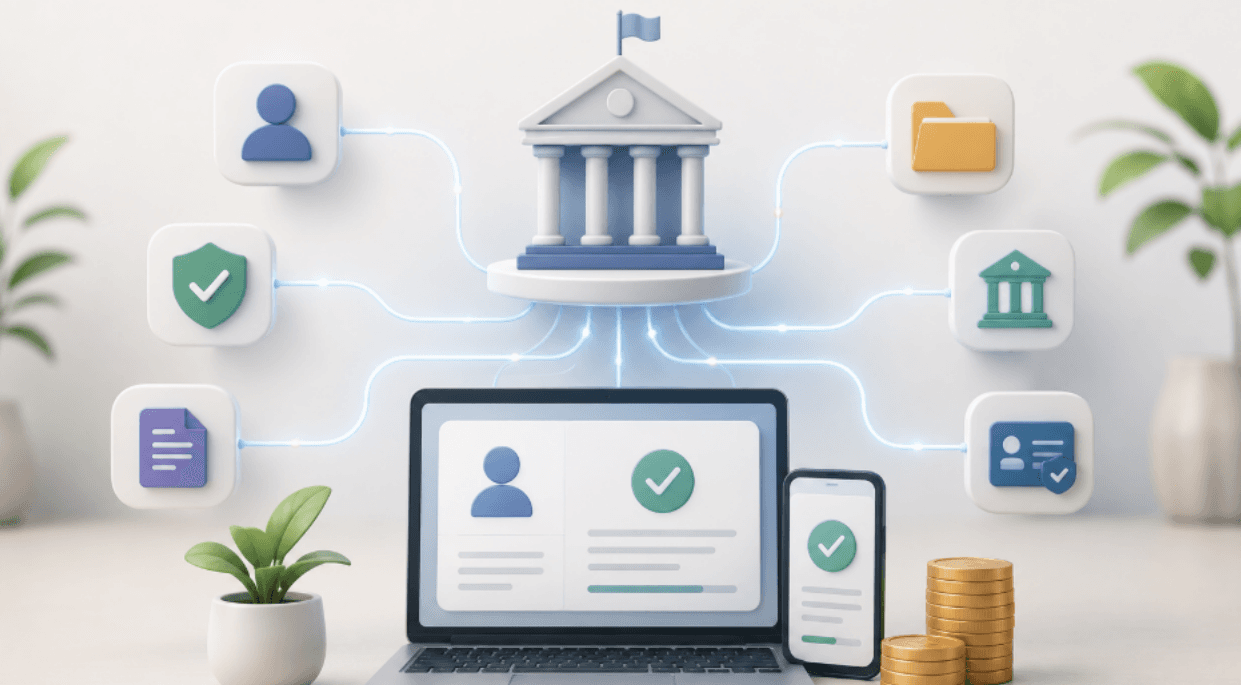
Why real-time Vidya Lakshmi Portal integration is becoming critical for scalable and efficient education loan operations.
Most conversations around education loan digitization focus on onboarding journeys, faster approvals, or paperless documentation.
But one of the most operationally significant layers in education lending sits much deeper inside the system architecture: government ecosystem integration.
In India, the Vidya Lakshmi Portal (VLP) functions as a centralized education financing platform connecting students, banks, and subsidy-linked schemes under a unified framework.
For banks, this integration is far more than an administrative requirement. It directly affects application consistency, subsidy eligibility validation, operational accuracy, and approval coordination across multiple systems.
When synchronization between lending platforms and VLP is weak, operational friction begins surfacing quickly:
Duplicate application records
Inconsistent status updates across systems
Delayed approval cycles
Missing subsidy-linked validations
Manual reconciliation between branch teams and portal workflows
Historically, much of this coordination depended heavily on offline processing. Students often submitted the same information repeatedly across disconnected systems. Branch teams manually validated records. Operational staff coordinated updates separately between internal lending platforms and government-linked workflows.
At lower volumes, these issues appear manageable.
At scale, they become structural inefficiencies.
This becomes particularly important in education lending because timelines are tightly interconnected. Delays affect more than loan processing alone. They impact admission confirmations, institute fee payments, visa timelines, and subsidy-linked eligibility windows.
That is why VLP integration increasingly needs to function as part of the lending workflow itself rather than behaving like an external reporting layer attached afterward.
When embedded directly into the operational journey, lending systems can synchronize application status updates in real time, validate eligibility-linked conditions faster, reduce repeated documentation cycles, and minimize branch-level coordination overhead.
For students, this creates predictability during an already high-stress financial process.
For banks, it reduces operational fragmentation across lending and compliance systems.
For a major public sector bank, we addressed this challenge by redesigning its education loan journey. Instead of treating government portal integration as an isolated compliance layer, the integration was embedded directly into the lending workflow itself, enabling real-time synchronization across applications, validations, and status updates.
Explore more